
The CFPB’s Disparate Impact Shift and What It Means for Marketing Compliance
The CFPB’s move to eliminate disparate impact liability is reshaping compliance, lending, and marketing risk. Here’s what financial brands need to know now.

Article written by
Austin Carroll
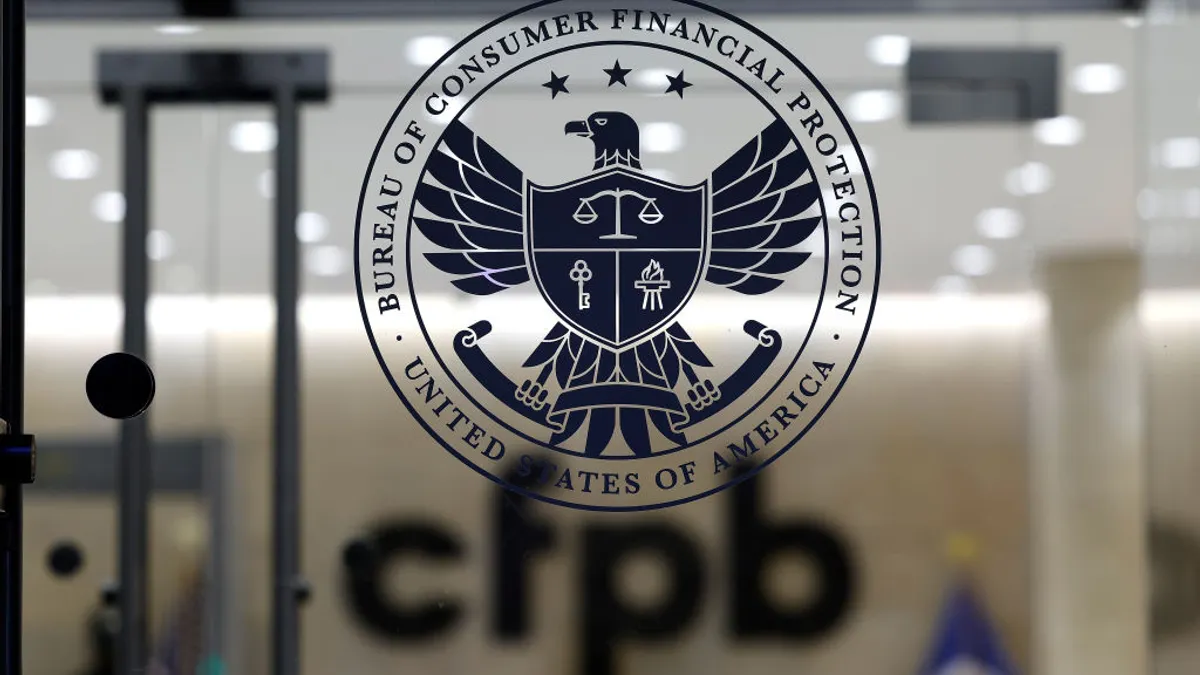
A major policy change from the Consumer Financial Protection Bureau is set to reshape how discrimination in lending is defined and enforced across the United States.
Under the proposed rule, the CFPB would remove the requirement for lenders to monitor and prevent disparate impact discrimination, a long-standing legal standard that focuses on outcomes rather than intent. Instead, enforcement would center only on intentional discrimination, narrowing the scope of what regulators can pursue.
This shift is part of a broader deregulatory push tied to the Donald Trump administration, which has also proposed significantly reducing the CFPB’s workforce. Together, these moves signal a clear change in how compliance will function in financial services.
But while this may look like a legal adjustment, its real impact will be felt in an unexpected place: marketing.
Understanding Disparate Impact and Why It Has Mattered
For decades, disparate impact has been a core principle in U.S. fair lending enforcement. It allows regulators to identify discrimination based on outcomes, even when no explicit intent exists.
In practice, this meant that companies were accountable not only for what they meant to do, but for what their systems and strategies actually produced.
This extended beyond underwriting models into areas such as audience targeting, campaign design, and product positioning. If a marketing strategy consistently excluded or discouraged a protected group, it could trigger scrutiny, even without deliberate bias.
Removing this standard changes the foundation of compliance itself.
From Outcomes to Intent and the Narrowing of Enforcement
The proposed rule represents a fundamental shift in regulatory philosophy.
Instead of asking whether a system produces unequal outcomes, regulators would now focus on whether discrimination can be proven as intentional. That distinction significantly raises the bar for enforcement and reduces the scenarios in which companies can be held accountable.
Supporters argue that this reduces ambiguity and compliance costs for businesses. Critics warn that it makes systemic bias harder to detect and address, particularly in complex systems driven by data and automation.
For companies, this creates a new kind of operating environment, one where legal requirements may be narrower, but risk is far less predictable.
Why Marketing Teams Are Now on the Frontline of Compliance
This change does not stay contained within legal or risk departments. It directly affects how marketing operates.
Modern marketing systems shape access. They determine who sees an ad, who receives an offer, and who is encouraged to apply for a product. In financial services especially, these decisions can influence real economic outcomes.
Targeting strategies, personalization engines, and AI-generated campaigns all have the potential to create uneven exposure across audiences. Under a disparate impact framework, those patterns could be flagged even without intent. Under the new approach, they may not trigger immediate regulatory action.
That does not mean the risk disappears. It simply shifts.
Marketing teams now operate in a space where they can unintentionally create outcomes that are legally permissible but reputationally or ethically problematic. The gap between what is allowed and what is acceptable is widening.
The Illusion of Reduced Risk
At first glance, removing disparate impact liability may seem like a reduction in compliance burden. In reality, it introduces a more complex and fragmented risk landscape.
State-level regulations may continue to enforce broader standards. Courts have historically upheld disparate impact in various contexts. Future administrations could reinstate similar rules with little warning.
This creates a scenario where companies may optimize for current federal guidance, only to find themselves exposed under a different regime later.
In other words, compliance is becoming less stable, not less important.
The Growing Gap Between Legal and Reputational Risk
One of the most significant consequences of this shift is the widening gap between legal compliance and public expectation.
Consumers, advocacy groups, and the media do not rely on regulatory definitions when evaluating fairness. If a campaign appears exclusionary or biased, the backlash can be immediate and severe, regardless of whether any law has been violated.
For brands, especially in financial services, trust is a core asset. Marketing decisions that create perceived inequities can erode that trust quickly.
This makes compliance no longer just a legal safeguard, but a brand protection strategy.
What This Means for AI and Automated Marketing
The timing of this change is particularly important because it coincides with the rapid adoption of AI in marketing workflows.
AI systems are now responsible for generating content, optimizing campaigns, and making targeting decisions at scale. These systems learn from historical data, which can carry embedded biases.
Without a requirement to monitor outcomes, companies may be less incentivized to audit these systems rigorously. Yet the underlying risks remain, and in some cases, they are amplified.
AI does not remove compliance responsibility. It distributes it across more systems, more decisions, and more moments in the marketing lifecycle.
How Forward Thinking Teams Will Respond
The companies that navigate this shift successfully will not treat it as a reason to scale back compliance efforts. Instead, they will recognize that the nature of compliance is changing.
They will invest in visibility across their marketing systems, ensuring they understand not just intent, but impact. They will build processes that allow them to evaluate campaigns before and after launch. And they will align legal, compliance, and marketing teams more closely than before.
Most importantly, they will treat compliance as something that happens during creation, not after the fact.
A New Era of Compliance Complexity
The CFPB’s move marks the beginning of a new phase in financial regulation, one defined by fewer clear rules, greater ambiguity, and faster shifts in enforcement priorities.
For marketing teams, this means stepping into a more central role in managing risk. Decisions about targeting, messaging, and automation are no longer just performance questions. They are compliance questions as well.
The removal of disparate impact does not simplify the landscape. It reshapes it into something less predictable and more strategically demanding.
And in that environment, the advantage will belong to companies that build compliance into how marketing actually works, rather than relying on rules that may not stay in place for long.
Article written by
Austin Carroll

Make marketing compliance effortless
Tired of chasing every regulatory update? Explore how Warrant automates approvals.
Newsletter
